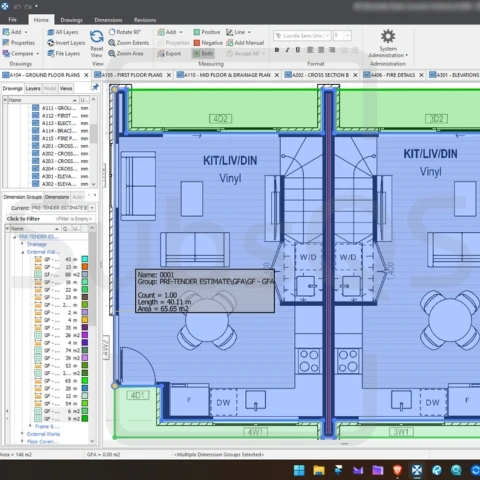
For Insulation Installers, Main Contractors & Builders pricing new build and retrofit work across NZ - we break your plans down into a clear insulation quantity schedule so you can see exactly how much product is required in each area before you lock in pricing with suppliers or clients.
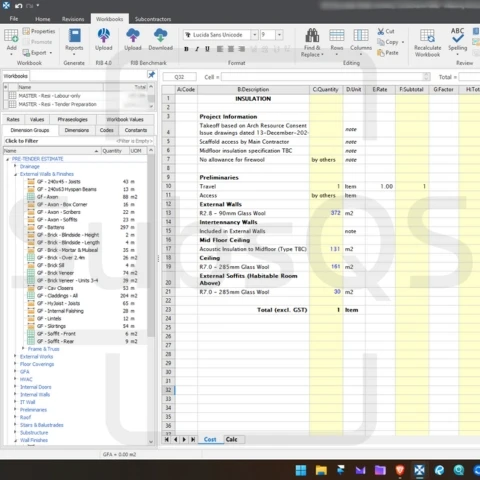
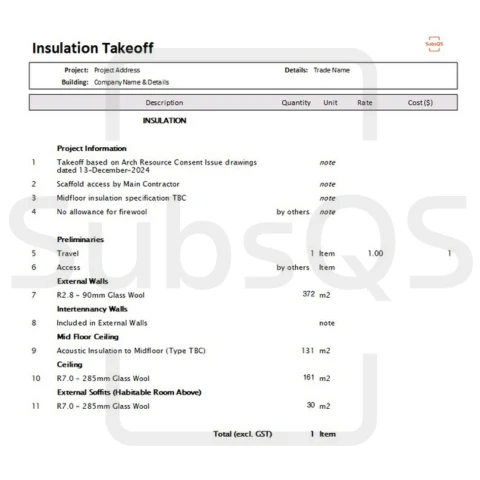
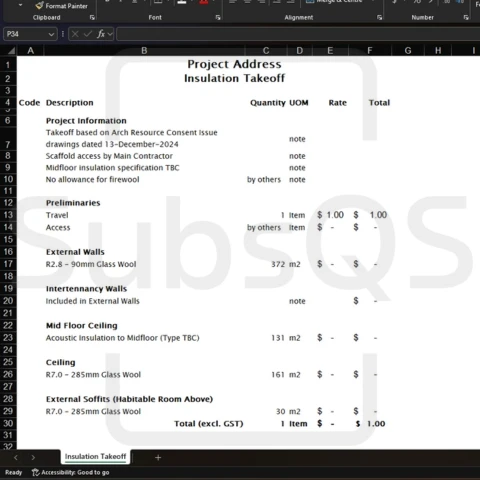
Quantities are issued in m² & LM with notes on insulation type, nominal R-value, thickness and installation location so your quote, purchase orders and installation crews are all working from the same numbers.
We separate the scope by specified insulation type, value & location (ceilings, external walls, mid-floors, ceilings, underfloor and slab edge/under-slab or pipe lagging where documented) and distinguish between thermal/acoustic insulation, PIR, batts/blankets & specialist products.
Intertenancy and corridor walls/ceilings are also identified so the fire and acoustic components are easy to follow at tender stage. Where pipework or ductwork insulation is shown on the mechanical or hydraulic drawings, we can include a separate services insulation schedule so nothing falls between the gaps at trade letting stage.
Email your plans and we’ll confirm a fixed fee & turnaround time for an insulation trade takeoff.


FAQ
How does an insulation takeoff help with pricing and supplier quotes?
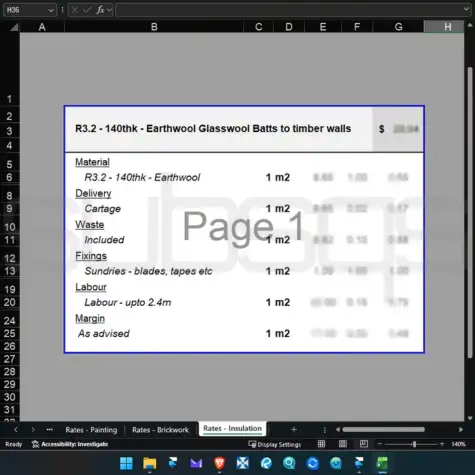
Because the quantities are broken down by location, construction type and R-value, you can send a clean schedule to suppliers, compare quotes on a like-for-like basis and build your labour/material rates on real numbers instead of allowances. It also makes it easier to explain to clients why insulation costs differ between roof, walls, floors and acoustic/separation areas.
Can an insulation takeoff be updated when drawings change or R-values are revised?
Yes. When updated drawings or specs are issued—new R-values, changed wall types, extra units—we can re-measure the affected areas and issue an additions/omissions summary.
What information do you need to complete an insulation quantity takeoff?
Ideally we receive the architectural plans and the specification that outlines insulation requirements (R-values, products, fire/acoustic ratings). Where services insulation is required, the mechanical and hydraulic drawings also help. With that, we can quantify m²/LM and highlight any gaps or inconsistencies that may affect insulation scope and cost.
Which types of insulation can be included in an insulation takeoff?
We can measure all types of insulation shown on the plans: roof/ceiling insulation, external wall batts, mid-floor and intertenancy insulation, underfloor and slab edge, rigid boards, acoustic infill, plus duct and pipe insulation where it appears on the mechanical/hydraulic drawings.